


Space and Astronomy Trivia
About this Quiz
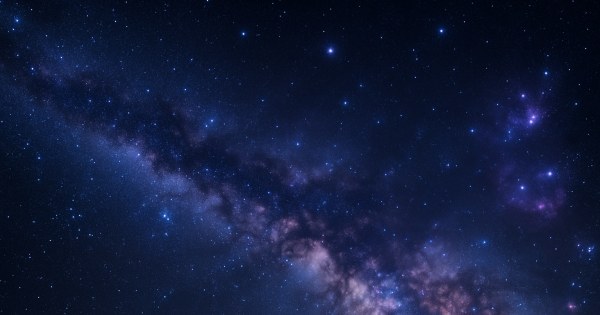
Look up on a clear night, and the sky seems calm. It isn't. The universe is a violent, restless place, and most of the drama happens far beyond what human eyes can register.

Consider the scale first. Light from the Sun takes about eight minutes to reach Earth. Light from the nearest star beyond that takes over four years. And the observable universe stretches some 93 billion light-years across, filled with an estimated two trillion galaxies. Numbers like these stop meaning much to the human brain, which is exactly what makes astronomy so humbling.
Then there's the strangeness. Space is not empty silence and gentle starlight. Neutron stars pack the mass of the Sun into a sphere the size of a city, so dense that a single teaspoon would weigh billions of tons. Somewhere out there, a planet drifts without a star, flung from its solar system to wander the galaxy alone. And the Sun itself loses roughly four million tons of mass every second, converting it into the energy that keeps everything alive.
Why do stars twinkle but planets don't? Because starlight arrives as a single pinpoint, easily distorted by Earth's turbulent atmosphere, while planets present a tiny disc that averages out the flicker. Small detail, big payoff for anyone who's ever wondered.
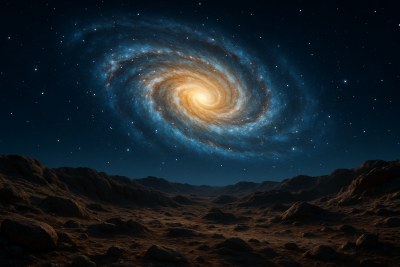
The history is just as wild. For most of human existence, the Milky Way was assumed to be the entire cosmos. Then, less than a century ago, careful measurements revealed that faint smudges in the sky were entire separate galaxies, each holding hundreds of billions of stars. The universe got unimaginably bigger overnight, and it's been expanding in human understanding ever since.
This quiz roams across it all. Planets and their storms. Moons hiding oceans beneath their ice. Rovers grinding across Martian dust. Black holes, pulsars, distant probes drifting past the edge of the solar system, and the faint afterglow of the Big Bang itself. Some questions reward casual stargazing. Others demand a genuine feel for the physics that governs it.

The cosmos doesn't hand out easy answers. Neither does this. Time to find out how much of the night sky actually makes sense — take the quiz and see where the knowledge holds up.
Advertisement