

Baby Animal Names
About this Quiz
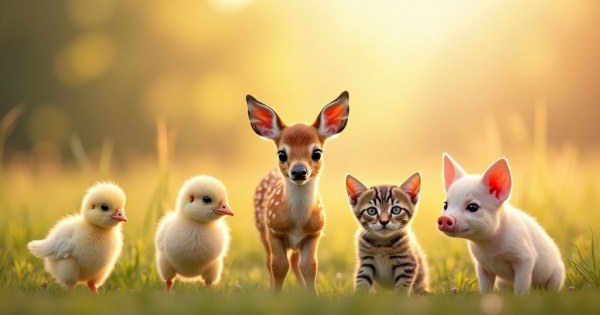
The animal kingdom has a secret vocabulary, and most people only know a fraction of it. Everyone learns the easy ones as children, chanting them along with the alphabet. But the naming conventions run far deeper and stranger than the classroom ever let on.
Consider the sheer inconsistency of it all. Some baby animals get charming, storybook names. Others inherit words so obscure they sound invented. And a handful share the same term across wildly different species, which makes the whole system feel less like science and more like a centuries-old game of telephone.
Here's something worth sitting with. Many of these words trace back to Old English, Middle English, or medieval French, surviving almost unchanged for a thousand years while the rest of the language moved on. They're linguistic fossils, quietly hiding in plain sight.
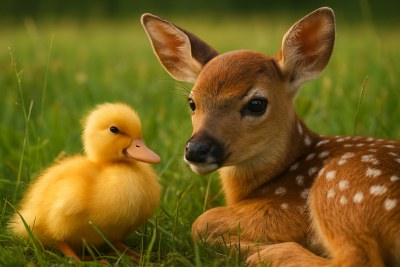
There are surprises in the natural world too. Certain young animals are born looking nothing like their parents, developing coloring and features that shift dramatically as they mature. Some species carry their offspring in ways that seem almost impossible until observed. And a few of these creatures are so biologically bizarre — laying eggs when mammals shouldn't, or glowing, or possessing senses humans can barely imagine — that their infants have earned names as unusual as the animals themselves.
Why do egg-laying mammals even exist? Why does one word describe the young of a fish, while an entirely separate word covers something that looks nearly identical? The answers reveal how humans have watched, hunted, farmed, and marveled at animals for millennia, leaving a trail of vocabulary behind.
The marine names are especially sneaky. Sea creatures tend to get overlooked, yet their offspring carry terms that trip up even confident guessers. Farm animals seem simple until the less familiar ones appear. And the animals from distant continents — the pouch-dwellers, the spined oddities, the birds of prey — hide their own linguistic traps.
This is a subject that rewards curiosity and punishes assumptions. Knowing that a puppy is a puppy counts for nothing here. The real test lies in the corners: the eels, the oysters, the platypuses, the falcons.
Twenty-four questions stand ready, ranging from the obvious to the genuinely tricky. Time to find out how deep that animal vocabulary really goes.
Advertisement