

Enneagram Personality Test

The Enneagram doesn't just describe what you do — it gets at why you do it. Answer honestly, not aspirationally, and let's find your type.
About this Quiz
The Enneagram has a genuinely strange lineage. Its nine-pointed symbol shows up in the teachings of a Russian-Armenian mystic in the early twentieth century, gets picked up by a Bolivian-born philosopher in the 1950s, then lands in Jesuit seminaries in Berkeley by the 1970s, where priests started using it for spiritual direction. Somewhere along that route it turned into the thing people now argue about at dinner parties. None of this makes it validated psychology — it isn't — but the underlying idea has staying power for a reason. It doesn't sort people by traits. It sorts them by what they're afraid of.
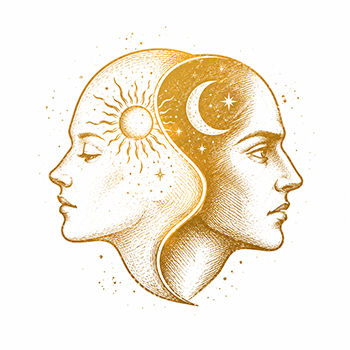
That distinction turns out to matter. Most personality models describe how someone behaves; the Enneagram tries to describe the motive running underneath the behavior. Two people can be equally hardworking, and the model would still separate them — one driven by a need to be right, the other by a need to be needed. This is where it gets interesting in practice. People who share an obvious surface trait, like ambition or generosity, often fall apart under stress in completely different ways, and the fear underneath predicts that better than the visible habit does.

The questions here aren't really asking about preferences. They're probing the split-second between a situation and a reaction — the free Saturday that immediately gets filled with a project, the challenged idea that produces composure in one person and a surge of energy in another. Those first instincts are hard to fake because they happen before deliberation kicks in. A question about what someone quietly craves does something similar: it goes after the wanting people don't usually announce, because that's where the pattern tends to hide. What looks like a mood question is closer to a motive question wearing casual clothes.

A word of caution worth saying plainly. A quiz like this can name a pattern, and naming one can be useful — it's easier to notice a habit once it has a label. But a label can also become an excuse, a tidy story someone tells to avoid changing. The type isn't the person. It's a rough sketch of one reflex, on one afternoon, answering twelve questions. Whether that sketch turns into something worth having depends entirely on what gets done with it afterward, which no quiz can measure.
Advertisement